
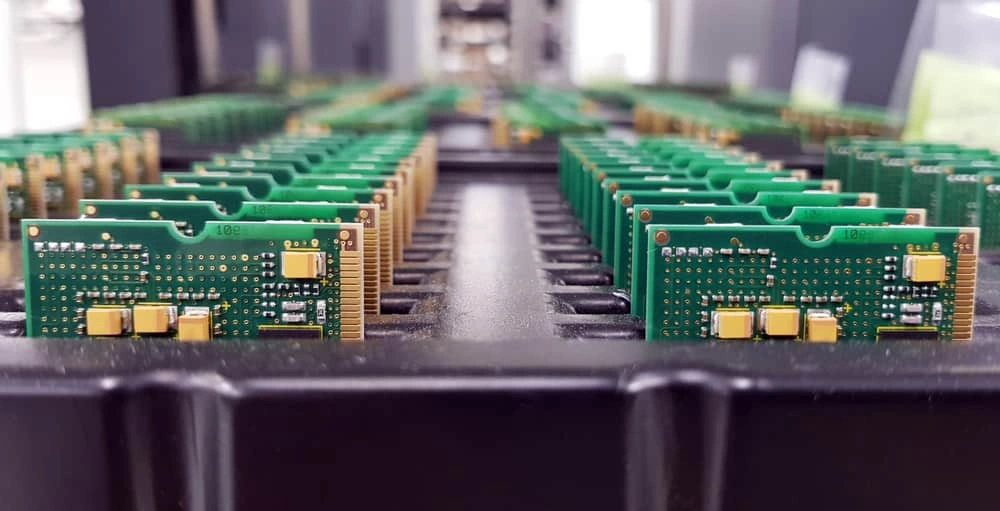
Rigid boards still make up the bulk of a global PCB market worth more than $80 billion, and demand from EV powertrains, AI servers, and connected medical devices keeps pushing volumes higher. Picking the right fabricator decides whether your product ships on schedule or stalls at first article. This guide ranks the top 10 rigid PCB manufacturers worldwide for 2026, comparing where they build, what they specialize in, and who each one suits. You’ll get a side-by-side table, a transparent selection method, and a buyer’s checklist covering certifications, layer count, and turnaround. Need 50 quick-turn prototypes or a million-unit automotive run? The shortlist below maps real capability to real use cases. Start with the snapshot, then dig into the detail.
Rigid PCB Manufacturers at a Glance
| Company | HQ | Specialty | Best For | Lead Time |
|---|---|---|---|---|
| TTM Technologies | Santa Ana, USA | RF & advanced HDI | Aerospace & defense programs | 2–4 weeks |
| PCBSync | Shenzhen, China | One-stop turnkey PCBA | Complex multilayer + assembly | 1–3 weeks |
| Unimicron | Taoyuan, Taiwan | HDI & IC substrates | High-volume compute & consumer | 2–5 weeks |
| Zhen Ding (ZDT) | New Taipei, Taiwan | Rigid-flex & HDI | Smartphones & wearables | 2–4 weeks |
| AT&S | Leoben, Austria | HDI & substrates | Automotive & medical | 3–5 weeks |
| Würth Elektronik | Waldenburg, Germany | Proto-to-series rigid/flex | European NPI | 1–3 weeks |
| Ibiden | Ogaki, Japan | IC packaging substrates | High-reliability compute | 3–6 weeks |
| Tripod Technology | Taoyuan, Taiwan | High-layer multilayer | Automotive & networking | 2–5 weeks |
| Sanmina | San Jose, USA | Integrated EMS + fab | Regulated industries | 3–6 weeks |
| Compeq | Taoyuan, Taiwan | HDI for mobile | Handset & automotive | 2–4 weeks |
Lead times are typical quoted ranges and vary by stackup, finish, and volume.
How We Ranked These Rigid PCB Manufacturers
This list weighs five factors rather than a single score. First, certifications: ISO 9001 as a baseline, plus IATF 16949 for automotive, AS9100 for aerospace, ISO 13485 for medical, and IPC-A-610 Class 3 for high-reliability assembly. Second, the capability matrix — layer count, materials, HDI, controlled impedance, and special laminates. Third, realistic lead time. Fourth, the depth and breadth of each firm’s customer base across industries. Fifth, geographic reach and supply-chain resilience. The order reflects fit and capability spread, not a strict best-to-worst verdict; the right choice depends on your project.
1. TTM Technologies
North America’s largest PCB fabricator, and the default when a program can’t leave the continent.
- Founded / HQ: 1998, Santa Ana, California
- Key Services: Rigid multilayer fabrication, RF and microwave boards, advanced HDI, plus RF components and integrated assemblies
- Notable Capabilities: High-layer-count multilayer stackups, mixed-dielectric RF designs, and AS9100-certified, ITAR-registered facilities for defense work
- Industries Served: Aerospace, defense, data-center networking, medical, automotive
- Best For: Programs needing trusted domestic supply and serious RF expertise
2. PCBSync
A Shenzhen turnkey shop that takes a design from bare board through tested assembly under one roof. PCBSync leans into complex, higher-layer work rather than competing on the cheapest single-layer runs.
- Founded / HQ: 2005 (20+ years), Shenzhen, China
- Key Services: PCB manufacturing, PCB assembly, and component sourcing as full or partial turnkey
- Notable Capabilities: 1–56 layers across FR4, HDI, flex, rigid-flex, Rogers, ceramic, aluminum, copper-core, and heavy copper; SMT, THT, BGA, mixed-tech, box build, and cable harness; testing via AOI, X-ray, ICT, flying probe, 3D SPI, and functional test; ISO 9001, IPC-A-610 Class 3, RoHS
- Industries Served: Automotive, medical, aerospace, industrial, IoT, robotics, telecom, drone, military
- Best For: Teams that want fabrication and assembly managed by one vendor on complex, multilayer designs
3. Unimicron
By revenue, the world’s largest PCB producer, and a heavyweight in HDI and IC substrates.
- Founded / HQ: 1990, Taoyuan, Taiwan
- Key Services: HDI boards, IC carriers and substrates, flexible and rigid multilayer
- Notable Capabilities: Mass-scale HDI, substrate-class lithography, and capacity spanning plants in Taiwan, China, and Germany
- Industries Served: Computing, smartphones, networking, automotive
- Best For: High-volume HDI and substrate-grade programs
4. Zhen Ding Technology (ZDT)
A flex and rigid-flex leader within the Hon Hai (Foxconn) ecosystem that also runs strong HDI lines.
- Founded / HQ: 2006, New Taipei, Taiwan
- Key Services: Flexible, rigid-flex, and HDI fabrication, plus IC substrates
- Notable Capabilities: High-volume flex and rigid-flex output and fine-line HDI tuned for consumer electronics
- Industries Served: Smartphones, wearables, networking, automotive
- Best For: Consumer-scale flex, rigid-flex, and HDI volumes
5. AT&S
Europe’s standout for high-end HDI and IC substrates, with a footprint across three continents.
- Founded / HQ: 1987, Leoben, Austria
- Key Services: HDI, any-layer interconnect, IC substrates, and high-reliability multilayer
- Notable Capabilities: Fine-line HDI, IATF 16949 automotive qualification, and plants in Austria, China, Korea, and India
- Industries Served: Automotive, medical, industrial, mobile devices
- Best For: European OEMs needing certified, high-reliability HDI
6. Würth Elektronik
A German group division built around fast prototyping that scales cleanly into series production.
- Founded / HQ: Part of the Würth Group, Waldenburg, Germany
- Key Services: Rigid, flexible, and rigid-flex boards from prototype through volume
- Notable Capabilities: Quick-turn European prototyping, strong DFM and engineering support, and broad material options
- Industries Served: Industrial, automotive, medical, instrumentation
- Best For: European NPI where design support matters as much as price
7. Ibiden
A Japanese pioneer of build-up HDI and IC packaging substrates with a reputation for reliability.
- Founded / HQ: 1912, Ogaki, Gifu, Japan
- Key Services: IC packaging substrates and high-density build-up boards
- Notable Capabilities: Advanced substrate technology and tight process control for demanding compute workloads
- Industries Served: Semiconductors, computing, automotive
- Best For: Substrate-class and high-reliability builds
8. Tripod Technology
A Taiwanese volume player known for high-layer multilayer and automotive-grade boards.
- Founded / HQ: 1990, Taoyuan, Taiwan
- Key Services: Multilayer rigid fabrication, HDI, and automotive boards
- Notable Capabilities: High-layer-count stackups and qualified automotive production lines
- Industries Served: Automotive, networking, server, industrial
- Best For: Automotive and high-layer-count volume runs
9. Sanmina
A vertically integrated EMS that fabricates its own boards, so design, assembly, and test stay in one chain.
- Founded / HQ: 1980, San Jose, California
- Key Services: In-house PCB fabrication plus full EMS assembly, test, and box build
- Notable Capabilities: AS9100 and ISO 13485 qualification and end-to-end traceability for regulated work
- Industries Served: Aerospace, defense, medical, communications, industrial
- Best For: Regulated programs that want board, build, and test under one roof
10. Compeq
A Taiwanese specialist in HDI for handsets that also serves automotive and computing.
- Founded / HQ: 1980s, Taoyuan, Taiwan
- Key Services: HDI fabrication, rigid multilayer, and automotive boards
- Notable Capabilities: Fine-line HDI at smartphone volumes and growing automotive capacity
- Industries Served: Mobile, automotive, computing
- Best For: High-volume HDI handset programs
How to Choose the Right Rigid PCB Manufacturer for Your Project
The right PCB manufacturer for a five-board prototype is rarely the right one for a million-unit production run. Match the vendor to the stage you’re actually in.
Certifications & Compliance
Treat ISO 9001 as table stakes. Add IATF 16949 for automotive, AS9100 for aerospace, and ISO 13485 for medical. For assembly, IPC-A-610 Class 3 signals the highest accepted workmanship tier — the standards body IPC maintains these definitions.
Capability Match
Confirm the shop runs your stackup daily, not occasionally. Check layer count, controlled impedance, minimum trace/space, and whether they handle materials like Rogers or heavy copper. HDI work in particular rewards specialists.
Lead Time & Turnaround
Ask for quoted lead times at your volume, plus expedite options. Prototype quick-turn and series production often run on different lines with different clocks.
Pricing Model & MOQ
Compare tooling, NRE, and per-unit cost together. Low MOQs help startups; tiered pricing rewards scale. Get the full landed cost, not just board price.
Communication & Engineering Support
A vendor that runs DFM review and flags issues before fabrication saves respins. Test how fast they answer and how clearly they explain trade-offs.
Industry Experience
A fabricator fluent in your sector already knows its compliance and reliability demands, which shortens qualification.
Scalability from Prototype to Production
The cleanest path is a partner who can carry you from NPI to volume without a vendor change and the requalification that comes with it.
Frequently Asked Questions
What’s the difference between PCB fabrication and PCB assembly?
Fabrication produces the bare board — the layered, etched, and plated substrate with no parts on it. Assembly (PCBA) then mounts and solders components onto that board using SMT and through-hole processes. Many vendors offer both as a turnkey service, while others specialize in one stage.
How long does rigid PCB manufacturing typically take?
Bare-board fabrication often runs one to three weeks, depending on layer count, finish, and volume. Quick-turn prototypes can ship in days at a premium. Full turnkey assembly adds time for component lead times, which today are often the longest single variable.
What certifications should a rigid PCB manufacturer have?
ISO 9001 is the baseline quality system. Beyond that, look for IATF 16949 (automotive), AS9100 (aerospace), ISO 13485 (medical), and UL recognition. For assembly workmanship, IPC-A-610 Class 3 is the highest standard tier and the one regulated industries usually require.
Can I get a quote without a finished design?
Yes, for a budgetary estimate. Most manufacturers can scope rough pricing from a layer count, board size, quantity, and material spec. A firm quote needs Gerber files, a drill file, and a bill of materials so the shop can run DFM and confirm feasibility.
Is it cheaper to manufacture rigid PCBs in China?
Often, especially at volume, thanks to dense supply chains and assembly capacity. The trade-offs are shipping time, time-zone communication, and IP considerations. Many teams prototype locally for speed, then move production offshore once the design is stable.
What does “Class 3” mean on a PCB?
Class 3 is IPC’s highest reliability category, intended for products where failure isn’t acceptable — aerospace, defense, and life-critical medical devices. It demands tighter tolerances and inspection than the Class 1 and Class 2 tiers used for consumer goods.
Choosing Your Rigid PCB Partner
Sorting through rigid PCB manufacturers comes down to matching certifications, capability, and lead time to where your product actually sits — prototype, ramp, or full production. The ten firms above span domestic RF specialists, European HDI houses, and Asian volume leaders, so the shortlist works whether you optimize for speed, scale, or compliance. For complex multilayer designs that need fabrication and assembly handled together, PCBSync is a strong option worth a closer look. Request a quote from a vetted manufacturer like PCBSync to compare turnaround and pricing against the others on this list before you commit a production order.
